
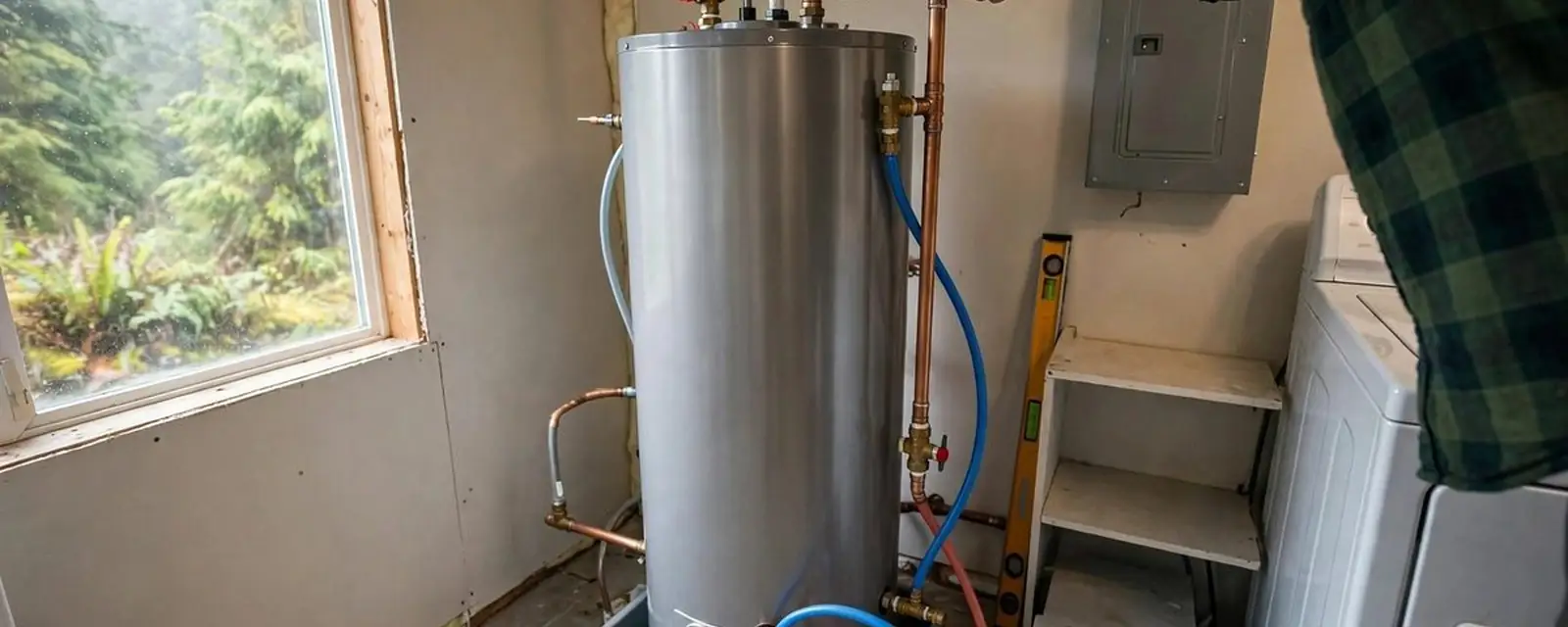
Installing a water heater in Smyrna, GA is a job with five connected systems: water, drain, gas or electric power, venting and safety relief. A confident homeowner can handle some of the water connections. The gas, the vent and the relief valve are the parts that injure people when they are done wrong, and they are the parts we would hand to a licensed plumber.
This guide explains the whole job so you can judge a quote, plan the day and decide what to do yourself. It does not walk you through gas work, because that is not a safe thing to learn from a web page.
What a water heater install actually involves
The old tank has to be shut off, drained and disconnected. That means closing the cold supply, turning off the gas or the breaker, opening a hot tap upstairs so air can enter, and running a hose to a floor drain or the yard. A 40 or 50 gallon tank can hold a lot of hot water for a long time, so draining is slower than most people expect.
Next comes the new unit. It has to sit level on a stable base, usually inside a drain pan if it is above a finished floor. The cold and hot lines connect with flexible connectors or rigid pipe, and each line should have its own shutoff within reach. Then comes the fuel, the vent, the safety discharge pipe and a slow refill that purges air from the lines.
Finally the unit is lit or powered up, tested for leaks and checked for temperature. A careful installer also tests the vent draft on a gas unit and sets the thermostat to a safe temperature. Skipping those last checks is how a heater that looks fine starts leaking carbon monoxide into a hallway.
The parts that must be right on every install
These five items are where inspectors and manufacturers focus, and they are the ones a rushed install skips.
- A temperature and pressure relief valve with a discharge pipe that ends where escaping steam or hot water cannot hurt anyone.
- A vent connection that rises continuously, with the clearances the manufacturer lists for combustible material.
- A gas shutoff at the appliance, tight connections, and a leak test with an approved solution before the burner is lit.
- An expansion tank when the house has a closed system, such as one with a check valve or pressure reducing valve on the main.
- A drain pan and a drain line where a leak would damage a finished floor or the ceiling below.
| Type | Fuel and power | Extra things to plan for |
|---|---|---|
| Gas tank | Natural gas line and a flue | Vent condition, combustion air, gas shutoff and sediment trap. |
| Electric tank | Dedicated 240 volt circuit | Breaker size, wire gauge and a clear service disconnect. |
| Heat pump tank | 240 volt circuit, condensate drain | Space around the unit, cool air supply and a place for condensate to go. |
| Tankless gas | Larger gas line and special vent | Gas capacity, vent material and a condensate line on high efficiency models. |
Smyrna note: permits, inspections and who may do the work
The City of Smyrna Building Division says the city has adopted the 2024 International Plumbing Code (IPC) with Georgia Amendments. Applications go through the city's online permit portal, and in person submittals are no longer accepted. That means you cannot simply walk a form to a counter on Atlanta Road, so ask early if your swap needs one.
The city's page does not list water heater replacement by name. It does say a permit is needed for projects involving two or more licensed trades. Call the Community Development Department at (678) 631-5387 and ask whether your specific job needs a permit, before the old tank comes out.
If inspections are required they are scheduled in the portal, so build that step into your hot water outage plan. Also check the plumber's license in the Georgia Secretary of State's GOALS portal, since only licensed Master Plumbers may run a plumbing business in Georgia.
Where homeowners get hurt: gas, venting and scalding
Carbon monoxide has no smell. A gas heater that backdrafts because the vent is loose, blocked or the wrong size can fill a closet or utility room with it. Smoke or soot staining around the top of the unit, a flame that rolls out of the burner area, or a headache that comes and goes at home are all reasons to turn the unit off and call.
Gas fittings are the second hazard. A joint that is slightly loose can leak for months. Professionals test every gas joint with an approved leak solution and confirm the shutoff works before lighting anything. If you smell gas, leave the house and call the gas utility or 911 first.
The third hazard is hot water itself. A thermostat set too high can scald a child in seconds, and a missing or capped relief valve turns a tank into a pressure vessel. Never plug or cap a relief valve discharge pipe, even if it drips.
What a good professional install visit looks like
You can use this list to judge whether the plumber you hired is doing the work properly.
No hot water and a tank that is leaking?
Call the 24/7 line. A licensed plumber can look at the unit and give you a clear price before work starts.
Should you repair, replace or install new?
A tank that is more than about 10 years old and leaking from the bottom is nearly always finished. Repairs make sense for a bad thermostat, element or gas valve on a younger unit. Our water heater replacement page explains how to decide, and the same logic applies whether you are swapping like for like or changing fuel.
If you are moving from a tank to a different system or adding a heater where none existed, the job grows. Gas lines, a new circuit or a new vent route all become part of the price. That work belongs on the water heater installation side of the ledger, and it is where a clear written scope matters most.
Serving Smyrna and the towns around it
We send licensed plumbers across Smyrna from Market Village to the Cobb Parkway corridor. If you live just southwest, our page for Mableton water heater and emergency plumbing calls covers the same line. You can also see every town we serve before you call.
Water heater installation questions
Some homeowners handle the water connections on an electric unit. Gas lines, venting, relief valve discharge and electrical hookups are safety critical, and mistakes can cause fires, carbon monoxide poisoning or scalds. For those parts we recommend a licensed plumber or electrician.
A like for like tank swap usually takes a few hours once the plumber is on site. Changing fuel, moving the unit, or fixing an old vent or gas line adds time. Ask for the scope in writing before work starts.
Many homes with a check valve or pressure reducing valve on the main have a closed system, and heating water in a closed system raises pressure. An expansion tank gives that pressure somewhere to go. Your plumber can test your static pressure and tell you.
If the tank overheats or pressure climbs, the relief valve opens and sends scalding water or steam down the discharge pipe. That pipe has to end somewhere safe, and the valve must never be capped or plugged.
The city page does not list it by name, so ask. Call the Smyrna Community Development Department at (678) 631-5387, tell them the fuel type and whether you are changing gas or electrical work, and they can say whether a permit and inspection apply.
Have a plumbing problem right now? The line is open 24/7.
Call (770) 214-4545