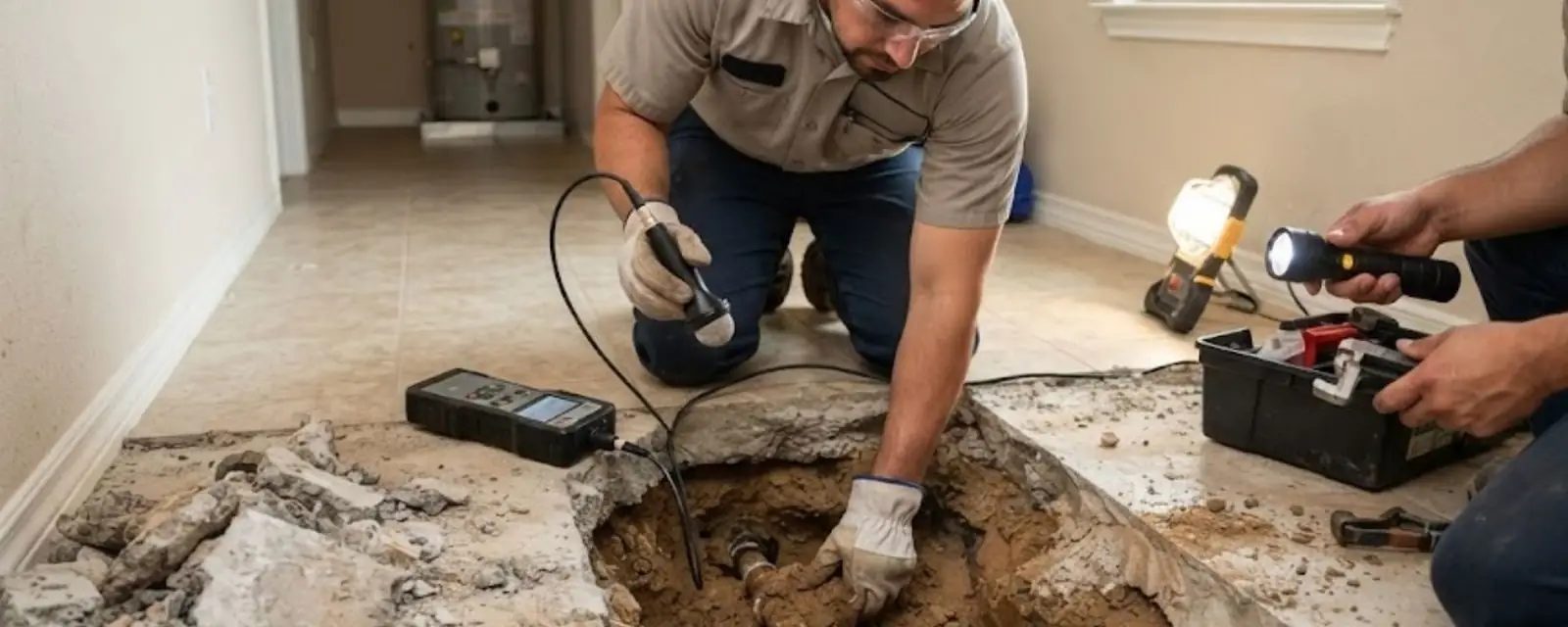
A slab leak repair in Smyrna, GA follows a set order: confirm there is a leak, pinpoint where it is, choose between a spot repair, a reroute or a repipe, then restore the floor. The pinpointing step decides most of the cost, because the less concrete anyone has to open, the less there is to rebuild.
This guide explains each step, the options at the decision point, and the insurance questions to ask before work starts. It is not a promise that your home has this problem. It is a map for the homeowner who has already been told it might.
Step one is proving the leak is under the floor
Warm patches on a floor, the sound of running water when everything is off, a meter that keeps turning, or a water bill that climbs with no explanation all point toward a hidden leak. None of them prove it is under the slab. Leaks also happen in walls, ceilings, crawlspaces and the yard.
A plumber isolates the house from the supply and watches the meter or a pressure gauge. A drop with all fixtures closed means water is escaping somewhere. Then the search narrows by zone, using acoustic listening gear, thermal imaging or pipe tracing.
Signs that often come before a confirmed slab leak
- Floor that feels warm in one spot, with no heating source below.
- Hissing or running sound with every fixture off.
- Damp carpet, lifting laminate or a musty smell along a wall base.
- Water pressure that drops without a known cause.
- A usage jump on the water bill with the same household habits.
Step two: pinpointing before anyone cuts concrete
Good pinpointing is the most valuable part of the visit. A plumber compares sound and heat readings across the floor, then marks the likely spot with a margin of error. Careful marking can turn a trench through half a house into a hole you can cover with a hand.
If you want the diagnostic side explained in more depth, our leak detection page covers the equipment and what it can and cannot find.
Smyrna note: what to check on your own meter and with the city
Smyrna buys treated water from the Cobb County-Marietta Water Authority and lists the City of Smyrna Utilities Department, at 678-631-5338, as its contact. If your bill looks wrong, call them first. They can tell you what the meter recorded and whether anything on their side of the meter explains the reading.
Cobb County's customer guide for its own water system says the property owner is responsible for all piping and fixtures on the customer's side of the meter. Smyrna's rules may differ, so ask the utility where your responsibility begins. A leak on your side is yours to fix, and knowing that early keeps you from waiting on a repair that was never the city's job.
Many Smyrna houses date from the postwar growth after the Bell Bomber plant reopened in 1951. That is background, not a diagnosis. Foundation type varies house to house, so confirm yours before assuming anything about where your pipes run.
Repairs that open or reroute piping follow the International Plumbing Code (IPC), adopted by Smyrna with Georgia amendments, and a pressure test after repair is normal practice. Ask for the test result before the floor is closed, and confirm with the Smyrna Building Division whether the work needs a permit.
Step three: the repair options
Once the leak is found, you choose among three paths. Each fits a different situation, and the right one depends on the pipe, the age of the system and how many leaks have already appeared.
| Option | What happens | Fits best when | Trade-off |
|---|---|---|---|
| Spot repair | Open the slab at the leak and replace the damaged section | One leak, pipe otherwise sound, access is easy | Floor is opened, and other weak spots may remain. |
| Reroute | Abandon the buried line and run new pipe through walls or attic | Pipe under the slab is failing in several places | More work in finished walls, less concrete cut. |
| Repipe | Replace all the supply piping in the house | Old or problem pipe material throughout | Highest cost up front, fewest repeat leaks. |
If a reroute or whole-house replacement looks likely, the repiping page explains how that work is staged and how long a house is usually without water.
Ask for the footage and the readings
Ask to see what the plumber saw: the meter test, the listening readings and any camera or thermal images. A confirmed leak with evidence makes the repair decision easier and gives your insurer something concrete to review.
If a plumber cannot show you how the leak was located, get a second opinion before any concrete is cut.
Step four: the insurance conversation
Policies differ a lot on slab leaks. Some cover the resulting damage but not the pipe repair. Some cover access costs to reach a covered leak. Some exclude damage from long-term seepage. The only reliable answer is in your own policy.
What to do before work begins
Take these steps in this order so nothing gets lost.
Think there may be a leak under your floor?
Call the 24/7 line. We will explain how we would find it and what each option would involve.
Step five: restoring the floor
After the pipe is fixed and pressure tested, the opening is patched with concrete and the finished floor is repaired. Matching flooring is often the part homeowners underestimate. Ask who handles it, because a plumber normally repairs pipe and slab, not tile or hardwood.
Drying matters too. If water has soaked cabinets or insulation, ask whether a drying service should be involved before new flooring goes down. Hidden moisture causes smells and mold later.
Where we help
We answer calls across Smyrna and the nearby Cobb County towns listed on our service area page. Homeowners southwest of the city can read about plumbing help in Mableton too.
Slab leak repair questions
Often yes. Good pinpointing limits the opening to a small area, and rerouting the pipe through walls avoids cutting concrete at all.
A plumber tests pressure and listens along the pipe paths. Leaks in walls, attics and the yard can mimic a slab leak, so testing comes before any cutting.
It depends on your policy. Some pay for resulting damage and access, and some exclude gradual leaks. Call the insurer before repairs begin and keep your photos.
It depends on how many leaks there are, how deep they sit, and which option you choose. We give a clear price before work starts.
Start with the Smyrna Utilities Department at 678-631-5338 to confirm the meter reading, then call a plumber to test for a leak on your side of the meter.
Have a plumbing problem right now? The line is open 24/7.
Call (770) 214-4545