
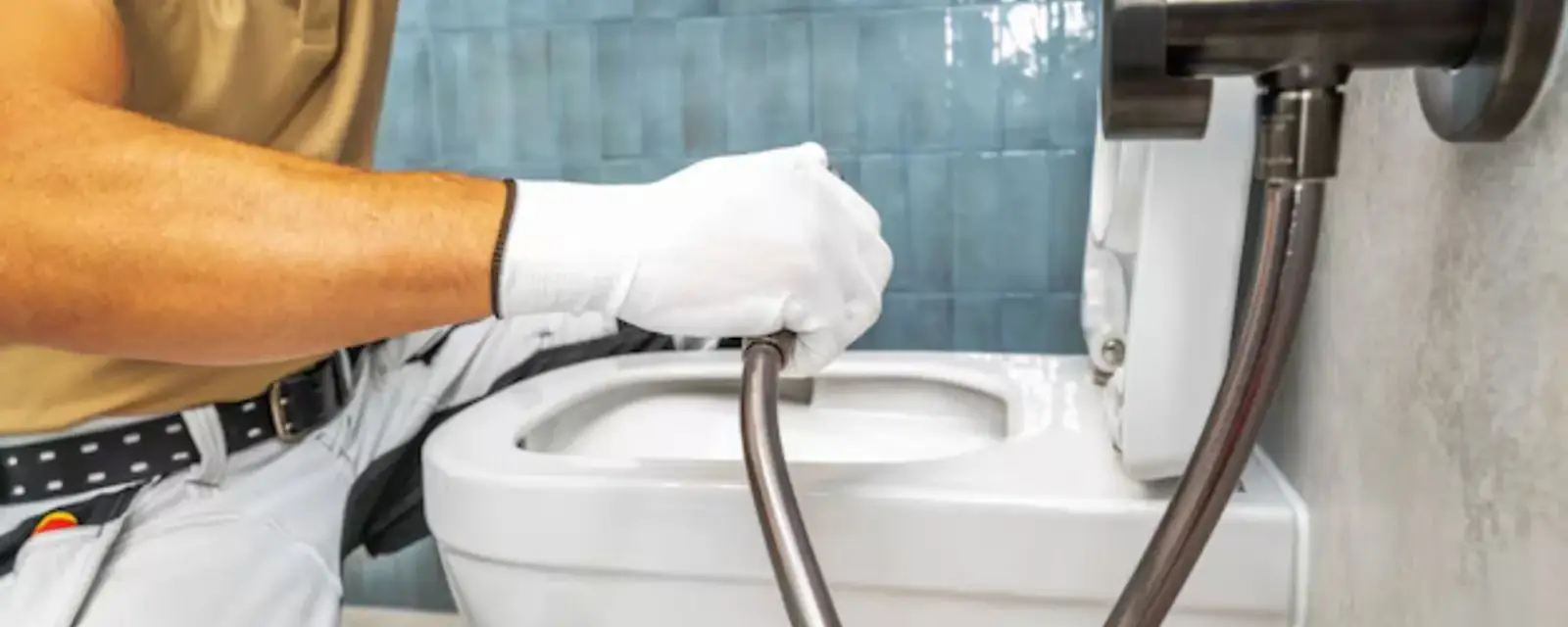
Toilet water line repair usually means replacing the flexible supply line that runs from the shutoff valve on the wall to the fill valve at the bottom of the tank. A cracked, kinked or corroded line leaks at the fittings, and a leak at the wall valve can mimic a leak at the toilet. The fix is often quick, but only if you first confirm where the water really comes from.
Here is how to trace the leak, replace the line, decide when the shutoff valve itself must go, and know when the problem is a sign of something larger.
Find the source before you buy parts
Water on the floor near a toilet has several possible sources. The supply line, the shutoff valve, the tank bolts, the wax ring at the base and condensation on a cold tank all produce a wet floor. Guessing wrong wastes a trip to the store.
Dry everything with a towel, then wrap a dry paper towel around each connection. Wait a few minutes and see which one gets wet first. Do the same at the shutoff valve stem and at the tank connections.
| Location | What it looks like | Likely fix |
|---|---|---|
| Supply line at the valve | Drips from the nut at the wall | Tighten gently or replace the line. |
| Supply line at the tank | Drip from the underside of the tank, near the fill valve | Replace the line or the washer. |
| Shutoff valve stem | Weeping around the handle | Replace the valve. |
| Tank-to-bowl bolts | Water at the back of the bowl base | Replace the bolt washers. |
| Wax ring at the floor | Water around the base only after flushing | Reset the toilet with a new ring. |
| Condensation | Sweating on the tank on humid days | Insulated tank liner or fixing humidity. |
Replacing a flexible supply line
Braided stainless lines are the usual choice because they resist kinks and last longer than plain vinyl. Measure the distance from the valve outlet to the fill valve, then buy a line a little longer so it can curve gently without bending sharply.
Swap the supply line in six steps
Have a towel and a small bucket nearby.
Quick checks after the new line goes on
- Dry the fittings and look again after 10 minutes.
- Flush a few times and check for drips under pressure.
- Make sure the line does not touch the wall or tank in a tight bend.
- Wipe the floor and inspect the subfloor for soft spots.
When the shutoff valve is the real problem
Old multi-turn or quarter-turn valves can seize or leak around the stem. Forcing a stuck valve can snap it and flood the bathroom. If the valve will not close fully, do not strain it. Shut off the main water supply to the house instead and call for help.
A valve that weeps at the handle, or drips even when closed, should be replaced. Replacement means shutting off the water to the house, so it is a short job for a plumber and a harder one for a beginner.
Valve stuck or water spreading?
Call the 24/7 line. We can shut off the leak, replace the line or valve and check the floor.
Smyrna note: who owns what on the water side
Cobb County's customer guide says the property owner is responsible for all piping and fixtures on the customer's side of the meter. If your supply line or valve leaks, that is your repair. Smyrna's own rules may differ in details, so confirm with the Smyrna Utilities Department at 678-631-5338.
Knowing where your main shutoff is matters here. Find it today, label it and make sure everyone in the house can reach it. Many Smyrna houses date from the postwar building wave that followed Lockheed reopening the Bell Bomber plant in 1951, so older valves in those houses may be stiff from decades without turning.
While the line is off, check the fill valve and the flapper inside the tank. A line that is replaced but a fill valve that keeps running will still waste water and wear the new connection. A few extra minutes here can save a second repair.
Also look at the escutcheon plate where the pipe enters the wall. Rust or mineral streaks around it can show a slow leak inside the wall that no supply line change will fix.
Signs of a bigger problem
A repeat leak at the same spot may mean the wall valve or the pipe behind it is corroded. Low water pressure at only the toilet can mean a clogged valve or an old line. Stains under the bathroom, spongy flooring or a musty smell point to a slow leak that has been running a while.
In those cases a supply line swap will not be enough. Our toilet repair page explains the usual causes inside the tank and at the base, and the leak detection page covers hidden leaks behind walls and floors.
Where we help
We serve homes across Smyrna and the nearby towns on our service area page. For the southwest side, see the page on plumbing in Mableton.
Toilet supply line questions
Many plumbers suggest checking them yearly and replacing them every several years or whenever you see corrosion, bulging or damp spots.
Braided stainless steel lines are the common choice. They resist kinks and do not crack the way old plastic can.
A small snug is fine. Heavy force cracks the fitting and makes the leak worse. If it still drips, replace the line.
Do not force it. Shut off the main water supply to the house and call a plumber to replace the valve.
The owner, on the customer's side of the meter, according to Cobb County's customer guide. Call the Smyrna Utilities Department at 678-631-5338 to confirm how it applies to your address.
Have a plumbing problem right now? The line is open 24/7.
Call (770) 214-4545