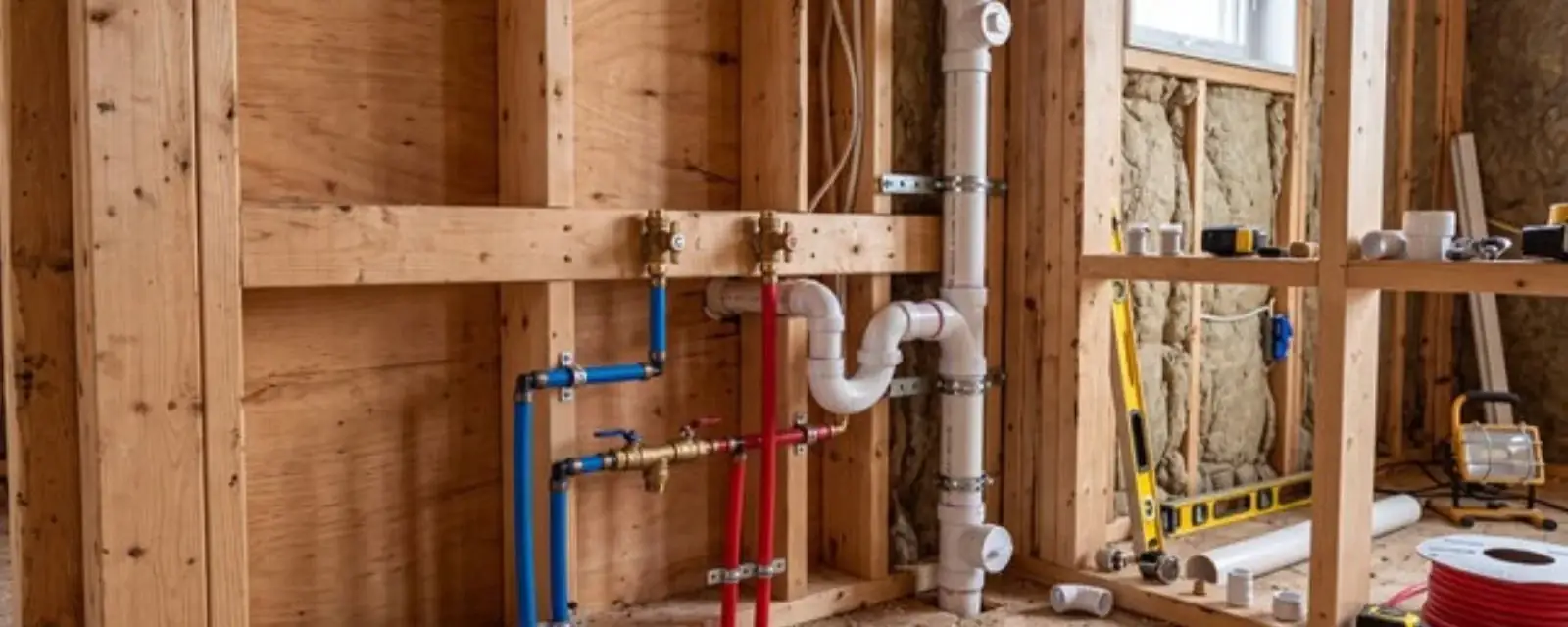
Rough-in plumbing cost in Smyrna, GA is set by the layout of the job more than by any per-fixture rule of thumb. Rough-in means the supply lines, drain and vent pipes, and shutoffs that are installed before drywall and flooring go up. The finish stage, when faucets, toilets and sinks are set, is priced separately.
We do not quote a number on this page, because two bathrooms that look alike on paper can have very different costs. What we can do is show you what the phase includes, what pushes the price, and how to line up bids so you are comparing the same work.
What rough-in actually covers
Rough-in starts with the plan. The plumber locates each fixture, sizes the drain and vent, and decides where the supply lines run. Then the pipe goes in: drains with the right slope, vents that reach the roof or tie into an existing vent, hot and cold supplies, and stub-outs where the fixtures will connect.
Shutoff valves, water hammer arrestors and any special blocking for tubs or wall mounted fixtures are part of the picture. So is a pressure test. The system is capped and filled with water or air so any leak shows before the walls are closed.
| Phase | What happens | When |
|---|---|---|
| Underground rough-in | Drains and sleeves below the slab or floor | Before concrete or subfloor. |
| Above-ground rough-in | Supply, drain and vent in walls and ceilings | After framing, before drywall. |
| Inspection and test | Pressure test and visual check | Before the walls close. |
| Finish plumbing | Toilets, sinks, faucets and appliances | After paint and flooring. |
The factors that move the price
What changes a rough-in bid
Use this list to understand why two bids differ:
For your real number, call (770) 214-4545. We give a clear price before work starts.
Slab, crawlspace or second floor
A bathroom on a slab means the drain may have to run under the concrete. A plumber may need to cut the slab, lay the pipe at the right slope and patch it. That adds a concrete trade and a longer schedule. A crawlspace is usually easier, since pipes hang from the floor joists in open air.
A second floor bathroom brings its own questions. Drains need a path down through walls, and vents need a path up. Framing often has to be modified to fit a three or four inch drain through the joists. Plan this with the framer before the pipe is ordered.
Smyrna note: permits, the older housing stock and calling 811
The City of Smyrna Building Division says a permit is needed for projects involving two or more licensed trades, and a new bathroom often brings in plumbing and electrical work together. Applications go through the online permit portal and inspections are scheduled there. Call the Community Development Department at (678) 631-5387 to ask what your project needs, and ask the same of your plumber.
Smyrna grew from 2,005 people in 1950 to 19,157 in 1970, so many additions here tie into homes of that era. Those homes commonly have cast iron or clay drain lines and older supply pipe, and the tie-in point is often where surprises appear. A camera look at the existing drain before you sign a bid is a sensible step.
If your addition involves digging for a new line, call Georgia 811 before the digging starts. It is the national call-before-you-dig line, and it protects both your crew and your neighbors.
Rough-in work is normally inspected against the International Plumbing Code (IPC), which Smyrna has adopted with Georgia amendments, before walls are closed. A failed inspection means reopening finished work, which is why the sequence and the inspector's schedule affect the price.
What a clear rough-in bid should list
If a bid is missing any of these, ask. A short question now avoids a change order later.
- The number and type of fixtures covered.
- The pipe materials for supply, drain and vent.
- Whether the bid covers cutting and patching a slab or wall.
- Who pulls the permit and who schedules inspections.
- What is excluded, such as finish fixtures and drywall repair.
Timing with the other trades
Plumbing rough-in sits in the middle of a sequence. The framer finishes first. The plumber, electrician and HVAC installer then work in the open walls. Inspections follow, and only then does insulation and drywall go in. A delay in one trade ripples into the others.
Ask your plumber how many days they need on site and how much notice they need before the walls close. A plumber who understands the sequence can help your contractor avoid costly standby time.
Planning an addition or remodel?
Call (770) 214-4545. A licensed plumber can walk the plan with you and give a clear price before work starts.
Rough-in versus replacing old pipes
If your project opens walls in an older house, it is a natural time to check what is behind them. Galvanized supply lines corrode from the inside, and polybutylene pipe from the late 1970s through the mid 1990s is commonly replaced. Our repiping page explains when a whole-house swap makes sense and when a targeted repair is enough.
For new fixtures, a new bathroom or a kitchen move, the work belongs under plumbing installation. We scope it by fixture, access and tie-in point, and we explain the plan before work starts.
Where we work
We send licensed plumbers across Smyrna and take calls from nearby towns, including those covered on our Mableton plumbing page. The service area page lists the rest.
Rough-in plumbing questions
Rough-in covers the drain, vent and supply pipes installed before walls and floors are closed, plus shutoffs and stub-outs for the fixtures. The finish stage, when fixtures are set, is separate.
Layout, distance to the main lines, slab or crawlspace, pipe material and permits all change the price. Two bids may also cover different scopes, so compare what each includes.
Most jurisdictions inspect rough-in before the walls close, with a pressure or air test. Ask your plumber and the building department when it should be scheduled.
It can, but opening and patching walls adds labor and cost. Doing it before drywall is far cheaper.
The city page says a permit is needed when a project involves two or more licensed trades, and it does not list plumbing by itself. Call Community Development at (678) 631-5387 and describe your project to find out.
Have a plumbing problem right now? The line is open 24/7.
Call (770) 214-4545